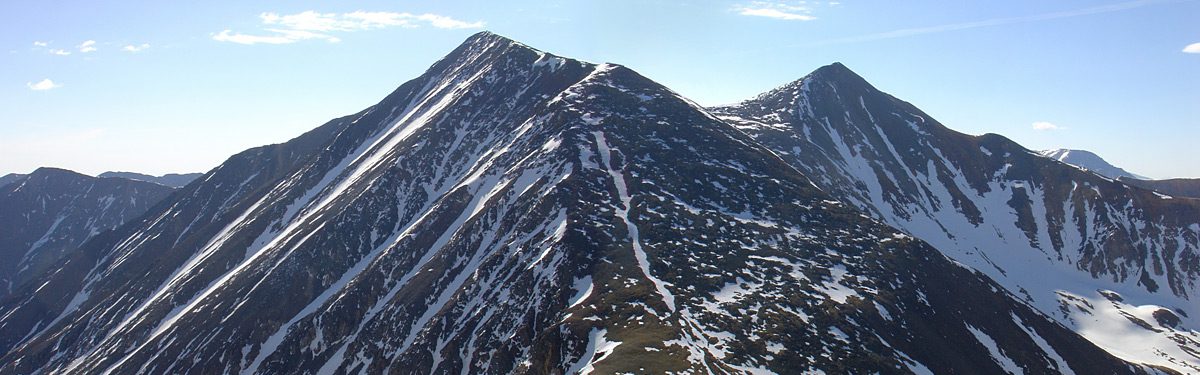
Israel Part II: The Holy Land

Quite awhile before I professed Jesus, I saw the movie, Exodus (based on the great book of that title by Leon Uris), starring Paul Newman. This Exodus was the second one, portraying in Technicolor the mass migration of Jews to Palestine in the aftermath of WWII. Interestingly, blue-eyed Newman’s father was Jewish (his mother was raised in Christian Science) and Newman always identified as Jewish. I’ve read the book and seen the movie a number of times and it still tugs at me. It chronicles the conflict that culminated in the birth of the modern State of Israel. Not to be missed.

Why is this tiny plot of arid ground such a powerful force in our world? Certainly, there is no other piece of real estate on our planet so hotly contested for so long by so many. Today, it both unifies and divides like no other location.

Jews are actually divided on its significance. When we talk about Christians or Moslems or Buddhists or even Hindus, we are usually describing those that adhere to a set of theological principles. On the other hand, there are many atheist or agnostic Jews, something it would be hard to imagine with respect to the other major faiths. So, there are Jews who don’t believer there is a God? The short answer is yes. If you dig a little deeper you can begin to understand why.

More than with the other major faiths (with the possible exception of the Hindus), Jews are an ethnic or cultural people with a wide range of religious beliefs and practices, including atheism. For many Jews, the current State of Israel has deep spiritual roots and it is their connection to their ancient spiritual heritage. For other Jews, it is the only piece of defensible property in a hostile world bent upon their annihilation. The word Holy is irrelevant in that context.

Many professing Christians refer to geographical Palestine as The Holy Land. And, it’s to that I turn my attention.

A number of weeks ago, I wrote a piece that basically called out the practice of declaring this or that location or site as holy. I said this because I believe the nature of Holy should be reserved for that which is of God. And, of course, God is not in a piece of dirt or unique to a particular location on earth, say in Sedona, Arizona, which some people believe is an especially holy place. (Lest I be misunderstood, Sedona is an absolutely beautiful place and an easy reminder of the beauty of God’s creation.)

At the time, I knew I might come up against the question of what I think about the place Christians commonly refer to as The Holy Land. Well, I guess I’m ready to take that on.

The short answer for perhaps the majority of Christians is that geographic Palestine happens to be where Jesus was born, lived, served his three year ministry, was killed and resurrected. It is the birthplace of their faith. For Christians it is the one place God chose to become man and save mankind from sins. In other words, pretty special.

Taken in perspective, Israel as it stands now is an area of 8,000 square miles. This may seem like a large number but it’s not. Israel would be the fourth smallest state in the United States, smaller than Vermont or New Hampshire. Only Connecticut, Delaware and Rhode Island are smaller. While larger than San Diego County, it is not twice as large. Its length is 263 miles while at its narrowest point, it is 9 miles wide. It would be swallowed up by Lake Michigan.

Many Christians also cannot separate the history and substance of their faith from that of the Jews who preceded Jesus. These Christians know Jesus as a Jew and see his life and teaching as inextricably linked with the history and teachings of Jews in the preceding thousands of years. Much of those thousands of years were spent in that small area and in some of the immediately adjacent areas. In other words, the long thread of Judeo-Christian history and theology is confined to a relatively small piece of earthly property. When you pack all of that in, perspective tends to get focused.

Of course, both historically and in the current era, there have been many and continue to be many professing Christians who either are unaware of their connection to Judaism or have actively sought to discredit and oppress Jews. Too many Jews are familiar with the Christian vitriol expressed to them with the phrase “Jesus killers.”

Of course, I think this is one of the great tragedies in the history of Christianity and I believe it’s a terrible scar and a true blight on the faith to which I belong.

Of course, Jesus was killed for many reasons, the most obvious of which was that he was a threat to the prevailing political order, for good reason. That theme has never ceased. He is still at the center of power politics as alliances are formed for and against those who profess him God. Today, in the United States, evangelical Christians are the most outspoken supporters of the State of Israel, even more strongly than some American Jewish interest groups. In a world where the vast majority of nations are aligned against Israel, millions of American Christians stand firm, with many of them supporting the nation through pilgrimages. They do to a large extent because they believe the land is holy.

As an historian, I am traveling to Israel because of its remarkable history, a history I know pretty well and have taught off and on. I wish to stand on the ground of the places I’ve read about much of my life. I want to visit the locations and enter the buildings constructed with different purposes in mind. I want to put myself in the mindset of the many people who have lived and died there, both in the distant pass and in the present time.

As someone with a passing knowledge of theology, I want to see how the three great monotheistic faiths have coalesced in this small area. I wish to see their places of worship, architecture, artwork and cultural expressions representing their faiths.

As a very amateur historian and theologian, also somewhat familiar with political science and economics, I hope to expand my knowledge base beyond what I’ve accumulated second hand. I’d like to see for myself.

But, primarily, that is not why I am going.

I am going on a pilgrimage. You would never have convinced me sometime ago that that would be possible.

That word, “pilgrimage,” can be tossed off fairly casually as a trip to a place of some special meaning, such as a baseball aficionado traveling to Cooperstown, NY, to see the National Baseball Hall of Fame. But the word, pilgrim, does not really lend itself to that kind of thing.

We can look at the word in one of two ways. A pilgrim can be one who makes a special journey to a place out of a deep sense of connection to that location. The word is usually connected with a trip to a place considered sacred or holy. For instance, all Moslems are encouraged or expected to make at least one trip to Mecca in their lifetimes, as pilgrims. To my knowledge, no other faith, including Judaism and Christianity expects that. This is not to say that those with other faiths do not make pilgrimages to, let’s say Tibet for Buddhists or to the Vatican for Roman Catholics. But, I’m not aware of it being an expectation. Forgive me if I’m wrong! I can always learn.

We can also interpret the word in a broader sense as one who is in perpetual pilgrimage. In this context, the pilgrim is making a life choice to be on a journey towards something truly sacred and significant. The destination is not a physical place but a spiritual one and it is probably the defining piece of that person’s existence. Specific journeys are all part of the ongoing defining journey and the concept of destination is appropriately broadened.

I guess I have to say I am a pilgrim. This journey to Israel is a pilgrimage and another step along the way.

We will be spending eight nights in the country. As part of a very organized tour, our itinerary is packed. We will be stopping at storied locations and visiting ancient ruins as well as churches, synagogues, museums, villages, you name it. I have been asked a number of times about what I’m most looking forward to. It’s hard to pick and I may be surprised afterwards.

If I had to pick three, they would be these.

Walking on the shores of the Sea of Galilee. Jesus’ home town of Nazareth is only 20 miles from there and he spent a significant part of his ministry around that very large lake. The Rembrandt print on my wall depicting Jesus and his disciples amidst the storm is of the Sea of Galilee. This is where he gathered his first disciples. I am excited about the chance to stand there.

Being immersed in the Jordan River by Pastor Mofid, a most remarkable man. As I’ve already been baptized and that is generally considered a one time thing, this immersion will have a different but especially powerful significance. My original baptism was a brief sprinkling of water, signifying a sacred bond. This one will be a reenactment of the original baptisms by John the Baptist in that same location and, most importantly, John’s baptism of Jesus. The appearance of a dove and a heavenly voice are not expected but would be welcome. 🙂 The Jordan River, of course, was the terminus of the original Exodus, as Moses, Joshua, Caleb and hundreds of thousands of their people anticipated crossing over into the Promised Land.

Praying at the Western Wall of the ruined Second Temple on the Temple Mount of Jerusalem. This is the most sacred spot in Judaism, also called the Wailing Wall. I can’t even begin to imagine all of the things that have taken place in that spot. It is the true epicenter of Judaism, Christianity and Islam. Assuming it is open and there has not been violence, I plan on wearing the yarmulke my father gave me and to pray in his name, inserting my own written prayers in the wall as so many others have done before me.

While I do not believe in a holy spot or a holy land, I understand the meaning behind the terms. As I believe there is one who is holy and he’s not a thing but a being, it is to him that I am devoted, not a place or thing. I would rather use the term “sacred.” That word means a thing that points to or is connected to God.

But, admittedly, I like the sound of The Holy Land. I hope to be changed permanently by the experience, however that plays out. After all, that’s what pilgrims expect. Amen.


Israel Part I: A Brief History

What a loaded word, Israel is. I hardly know where to begin and I have no idea where this will end.

We will leave for that storied country this Friday. It’s been a long time coming. My sense of the place runs very deep. My feelings are complex. Being passive or neutral aren’t in play.

In some way, this is the sequel to my post of a few weeks ago, entitled, “I am a Jew.” Assuming you have time and interest, you’d probably just need to scroll backwards a bit to find it.

With half of my lineage Jewish, both Ashkenazi and Sephardim, with my pilgrimage as a follower of Jesus and my training and teaching experience as an historian, there’s no lack of material.

The word originates in the Book of Genesis when there lived a man named Jacob. His father was Isaac who was the son of Abraham, often referred to as the father of the Hebrew people. Without going into detail, Jacob spent a night wrestling with a heavenly being, whom scholars say was God. Many Christians believe it was Jesus. That man told Jacob he would henceforth be named Israel which, in Hebrew, means “he that strives with (or wrestles with) God.”

As the Bible relates and tradition explains, Jacob/Israel had twelve sons which resulted in the “twelve tribes” of Israel. The youngest son, Joseph, was sold into slavery by his brothers because he was the favorite of his father, Israel. To make a long story short, Joseph ended up In Egypt where he raises in prominence until he is Pharaoh’s right hand man. Facing a famine in their homeland, the other eleven brothers and their father end up going to Egypt for help. They reunite with Joseph and that is the beginning of the Jews living in Egypt, eventually being enslaved there. Fast forward hundreds of years of exile, add Moses and forty years of wandering in the desert, and you arrive at the Promised Land … the place God has handpicked for his “chosen people.” It was then called Canaan, and was said to “flow with milk and honey,” a most desirable place. This reportedly occurred around 1200 B.C. Eventually, the region was divided into two kingdoms, Israel in the north and Judah in the south. Ultimately, the city of Jeru-salem rose up and became a capital, it’s name meaning “City of Peace.”Shalom or Shalem” of course, is Hebrew for peace.

Of course, Jesus’ birthplace of Bethlehem is only a stone’s throw from Jerusalem and Jesus died nearby eventually. In the heart of Jerusalem, King Herod had rebuilt Solomon’s destroyed temple around the time of Jesus (where it was believed the one true God resided in a way that he could be approached by a single priest each year to atone for the sins of the people). That temple was largely destroyed by the Romans in 70 A.D.

Islam was introduced into the region in the 7th century by Moslem conquest. Islamic tradition states that the Prophet Mohammed was carried by a mythological horse from his capital city, Mecca, in what is now Saudi Arabia, to the Temple Mount in Jerusalem. From there, he ascended to heaven. Islam considers Jerusalem to be their third holiest city, after Mecca and Medina. Moslems built the Dome of the Rock adjacent to the ruins of the Jews’ Second Temple to honor this distinction and the importance of Jerusalem to their faith.

For a time, even though the region was dominated by the Muslims, Jews and Christians were allowed to live there in relative peace. This ended with significant persecution and the destruction of many churches and synagogues around the year 1000 A.D. The first Crusade, designed to liberate Jerusalem and what was considered the Holy Land, by the European Christians, was launched about 100 years later, in 1099. For awhile, the Christians held Jerusalem but what eventually followed were repeated wars between Crusaders and various Muslim kings and generals (also fighting amongst themselves) representing different regions. Approaching modern times, the Ottomans (Turks) controlled Jerusalem and Palestine from the 16th until the 20th centuries, before losing it to the British following WWI.

Without getting too complicated, the British managed the area until just after the end of WWII. In 1920, there were approximately 700,000 people living in the region whose borders were the Mediterranean on the west and the Jordan River on the east. To the north was basically Syria and to the south, Egypt. 80% were Muslims. Christians and Jews each numbered approximately 75,000.

Mt. Zion is the high point in Jerusalem where the First and Second Jewish Temples were built and upon which is also built the Muslim Dome of the Rock. In the late 1800s, in response to the Jewish Diaspora (mass forced exodus and scattering of Jews around the world as a result of constant persecution), the movement called Zionism was born. Its aim was to create a viable homeland for Jews in their ancestral “promised land.” During the latter 19th century and early 20th century, a trickle of Jews arrived back in Palestine, setting up homes and communities, while the dream for an actual Jewish state burned brightly in the hearts of many.

With the end of WWII and amidst the ravages of the Holocaust, the cause of Zionism was now viewed by many Jews as the only possible way they would be able to survive as a people. Interestingly, many of the emerging leaders and voices for this were secular Jews, as many Jews lost their faith in the horrors of the period. Some of the European survivors, along with Jews who had already fled Europe and with others who had been living in Palestine, formed a plan for bringing their dreams to fruition. Thus, we see the second great Exodus (following the first escape from slavery in Egypt thousands of years previously) as thousands of Jews tried to migrate to that little slice of land they saw as their ancestral right and the only way they could survive as a people. In their mind, they had two alternatives: Annihilation or Survival and the only means of survival was a homeland they could protect.

For the first couple of years, this ragtag group of men and women basically battled with British authorities who did not want a new Jewish state. The British were pro-Arab in their politics, especially as they needed Arab oil to fuel what remained of their empire. There were a number of skirmishes between the British and newly formed Jewish paramilitary organizations like the Irgun and the Haganah. Future Israeli prime ministers and leaders were some of their most notable commanders. In 1948, there were approximately 750,000 Jews in Palestine and an equal number of Jews spread out in other Mideast countries. I believe there were about 100 million Arabs in territories surrounding Palestine, all of whom vehemently opposed a Zionist beachhead in Palestine. There were approximately 150,000 non-Jews (Muslims and Christians principally) also living in Palestine.

By 1947, the Jewish paramilitary groups were battling both Arab forces and the British. The region was basically in civil war. It must be recalled that the occupying British were also simultaneously dealing with India, which declared independence from Britain in August 1947, and with increasing Soviet pressure in Europe, not to mention a host of domestic issues in their own post WWII homeland.

On May 14, 1948, the formation of the modern state of Israel was announced to the world  via radio, by David Ben-Gurion, after whom the airport we will soon land at outside of Tel Aviv was named. Two things immediately happened. The United States was the first nation to formally recognize Israel and the combined nations of Egypt, Syria, Jordan, Iraq, Saudi Arabia, Lebanon, Yemen, Morocco and the Sudan sent their armed forces to defeat the small forces of newly formed Israel. Israel miraculously persevered and in the spring of 1949, separate armistices were signed and Israel had survived its birth.

In the decades that followed, there were two other major wars. The first occurred in 1967 when Israel (under Prime Minister Golda Meir and Defense Minister Moshe Dayan) fought Egypt (under Gamal Abdel Nasser), Syria, Jordan and the other Arab nations in what was called the Six Day War. The Israelis ended up soundly defeating the Arab, thereby increasing their territory, which they held onto as a buffer against future attacks. The second war was launched by the Arabs on Yom Kippur (the Day of Atonement) in October of 1973. Again, the Arabs were defeated. Ever since, we have been in a never-ending dispute over territory, refugees and the nature of homelands.

Now, Palestine is carved up into the State of Israel, Israeli-occupied territories and territories run by Palestinians and other groups (such as Hamas) who act as insurgent agents of other countries (such as Iran).

An explanation of the last thirty or forty years of the area would take more space than I’ve already taken. Now, Jerusalem, which is the capital of Israel, is not recognized as the capital by nearly every country. It is a city divided and an epicenter for more than we can imagine.

The City of Peace is at the confluence of the three major monotheistic faiths and all of the nations and alliances that have lined up around it.

In the early and mid 1980s, I told my students that if World War III ever began, it would begin right here. On the Temple Mount in the City of Peace. Times have changed. Conditions have shifted. But not that much.

Do we really know what lies deep in the hearts of men? How simple seem the utopian musings of those who do not know history.

Thousands of years ago, the Hebrew people made thrice annual pilgrimages up that grade to the mountain of Zion, singing psalms to their God. In the centuries since, that mountain has been torn by war and civilizations who have both claimed it as holy and as nothing but politically-important dirt. At the very top, lie the ruins of the Second Temple built by God’s chosen people as his house and by those who profess Islam as the place their revered prophet rose to heaven. It is also the place where Jesus preached, was tried and condemned, slaughtered a short distance away. He walked the Via Dolorasa on the way to his execution.

A little over a week from now, after studying and teaching this for years, I will (God willing) be standing on those spots, imagining the voices of the stones, wondering what they have to offer for a simple man as I, so removed by time and space.

Scandal of Grace

We sang a song this morning that included the phrase, “scandal of grace.” Sometimes, words and lyrics slip by us, perhaps making a momentary connection, but more frequently evaporating quickly. I haven’t heard this particular song for awhile although it’s familiar. My thoughts rested on this phrase as a bit unique. Anyone who has read any of my postings knows that grace is a constant theme. In my mind worth revisiting, even if just for a moment.

I have said before that I believe grace, as a foundation of Christianity, is unique to the world’s major faith systems. Nearly all others teach that the way to get from here to there (whatever here and there look like) is by effort. Jesus teaches differently and that’s a big deal. Really, there is no effort required and no effort is good enough so it doesn’t matter.

I have also said before that grace is, perhaps, the most powerful force in all of creation. It is one way by which love is projected. Love and grace go hand in hand. Grace, it turns out, is the greatest gift of all and is a way we can understand what love really is and what love really requires.

So, what could the phrase, “scandal of grace,” actually mean?

Well, for starters, let’s look at the word and concept of scandal. Turning to the handy dictionary, it certainly doesn’t look like scandal and grace go well together. I see scandal described as something “reprehensible” or causing “outrage.” One definition has scandal as an action or event that is “morally or legally wrong.” Pretty tough stuff.

However, diving more deeply, it apparently comes from the Latin, scandalum, which means “cause of offense.” The Greek skandalon is translated as a snare or stumbling block. Do these help?

On the surface, probably not. But I think there’s more to it, which is one reason I think the songwriter was very specific in choosing the phrase in the first place.

Let’s flip the whole thing on its head. Something I think Jesus was really good at. He said the rules of this world are not really the rules. And the rule followers of this world are playing with dynamite.

Because rule followers like rules. And, adherence to rules requires all sorts of effort and conditions, which (in turn) require a boatload of energy to judge things on the merits. And that’s where things get all tangled up and we bind ourselves in veritable straight jackets. I expect it’s very hard to be gracious when bound in a straight jacket.

We humans build all sorts of institutions and edifices around rules. Now, rules aren’t inherently bad, of course, but when they become the thing that demands our allegiance in overpowering ways, the rules themselves become sacred, displacing what is really sacred. Rules beget rules, which in turn beget interest groups charged with enforcement, invariably leading to more rules, leading to divisions and distrust, leading at times to anger and contempt and … well, you get the picture.

We are especially good at dividing ourselves, organizing our communities based on some sense of merit and accomplishment. It’s no wonder pride is considered the greatest sin. Pride is a really good divider. None of us is immune.

You want to see scandal? Just look at the face of the elder brother in Rembrandt’s rendition of Luke 15:11-32, when the father exudes grace at the return of his wayward younger son. With a heart turned hard at the grave injustice of it all, the breaking of the rules (as the elder brother perceives them), he clearly finds the whole thing reprehensible. This is the Gospel in a nutshell and what a scandal it is!

Or course it’s scandalous. What an attack on the prevailing cultural norms, regardless of time period. When the powers that be toss the thick rule book out the window, replacing it with a word that relegates the most intricate codes to virtual dust, how else to describe it?

In a world where accomplishment, conformity and accumulation drive behavior, to sweep them off the table with a free gift is to expose the house of cards as what it really is. Just a fragile thing built upon a promise of stability but, in fact, possessing nothing of the sort.

And that’s what grace does. And this is where it gets interesting.

We can choose to look at grace in a couple of different ways. Simply, we can nod our heads and realize that grace is a really neat thing. We can acknowledge that unmerited giving is an especially good trait, made far more meaningful when the giver is God.

Or, we can shake the cobwebs from our heads and, flatly, be stunned. We can begin opening ourselves to the possibility that this thing, grace, is suffused with such power that it can bring the world to its knees. In fact, in my mind, it already has. I’m just too simple minded to grasp the enormity of it all.

So, yes, as I sang the words this morning, I briefly went to a place that reminds me of this. Yes, grace is amazing. Amazing Grace. Surely a scandal of epic proportions. A scandal celebrated by a celestial choir to which we are all called to join. Amen.

Fingers and Mirrors

We are really good at pointing fingers.

We are really not good at looking in the mirror. Well, at least not objectively.

I have mentioned this before but perhaps one of the wisest statements in the past century or more was purportedly made by British writer, journalist, and philosopher G.K. Chesterton. I have a number of his books which are quite profound and full of insight. Perhaps his most famous and oft-sited quote, however, is perfect in its brevity.

In response to The Times of London posing the question to a number of famous authors around 1908, “What is wrong with the world?,” Chesterton wrote back: “Dear Sirs: I am.”

A number of deep truths lie at the heart of Christianity. This is certainly one of them.

I bring this up because almost all I see these days are fingers (pointing). Almost never mirrors (reflecting).

This is challenging on a number of levels, some not so hard to understand and some very hard. I’ll try to unpack that.

On a rather surface level, it’s obvious that our days are punctuated by accusing fingers all of the time. The media (whether mass media or more specialized forms of relaying information) are wholly built around the art of accusation and its twin, self-aggrandizement. TV, radio, and the internet are full of one-upmanship in the mad scramble to point out the flaws of others. This hyper-magnification builds intensity into a virtual snowballing until differences overwhelm any sense of connectivity. We are surrounded by enemies.

In this highly charged environment, labels take on lives of their own and individuals are damned by association. Inherent biases become increasingly exaggerated, rather than calmly considered. I have studied prejudice and the various means by which prejudice is both intensified and remediated. When we feel attacked, few constructive solutions are possible.

Charlottesville provides an excellent example. A fringe group whose actual numbers are of no real consequence gains a highly public platform to demonstrate their fear and hatred. Of course, they feel completely justified as they believe their thinking is under attack. Most all of society is repulsed by their platform of racial superiority. Interspersed in their numbers are symbols representing terror and genocide. Their fingers are pointing, loudly and clearly.

A loose coalition of others gather to oppose them. This coalition has its own symbols, coalescing around the concept of anti. Anti this and anti that. Anti racism. Anti Trump. Anti sexism and so forth. Their fingers are pointing, loudly and clearly.

Each feels justified. The tiniest spark is needed to ignite the conflagration that is entirely predictable, especially in light of the current state of affairs. So many symbols. So many fighting words. So much finger pointing and rationalization.

Our team colors are now courtesy of Fox News or CNN. Rush Limbaugh or the New York Times. A cacophony of noise, all critical and all self-righteous.

The fingers point like a dagger to the heart. The mirror just tells us we’re beautiful.

Lest I be misunderstood, I will say again that there is such a thing as righteous anger. There is such a thing as evil, to which we are called to oppose. But, the terrible danger is that this anger grabs ahold and turns into contempt and I, for one, believe contempt is never righteous. In fact, it is ruinous to the core.

There is a deeper layer to this and it is where Chesterton and the Gospel go. It demands a great deal of effort, far more effort than it takes to lash out with accusation. As such it is far more rare, although made noteworthy by those who we now hail for their unmatched moral leadership … people such as King and Gandhi, Bonhoeffer and Mother Theresa. There is no question but that these and others like them were familiar with their mirrors.

When the self-righteous one looks into the mirror, as I just said, he or she sees something to be very prideful of. This is another way of describing a sense of personal beauty. The natural response, of course, is to sally forth, open the door to the outside and point the finger at others.

When the humble one looks in the mirror, he or she sees a mixture of things, including many flaws that are actually fingers pointing inwards. This is impossible for the narcissist but a matter of course for the self-reflective and the penitent.

This is where life is lived as quick to love, slow to judge. When Jesus gave us the seemingly impossible task of loving our enemies, he didn’t mean we had to countenance their behavior. He didn’t mean we could not be angry with them. What he meant was that we needed to (as the late wise Dallas Willard defined love), “will their good.” And the word “will” is very different in scale from words such as “want” or “seek” or even “strive for.” An act of will is to be laser focused on using the resources at our disposal to make something happen. Willing the good of another cannot be accomplished with a contemptuous heart. Willing the good of another cannot be accomplished while hurling accusations. For, and here is where the rubber hits the road, the “good” of another is the place where they know they are unconditionally loved and are able to love others freely. It is a liberating place, not a place of burden.

When we see ourselves objectively, as God sees us, we know we are deeply flawed and deeply loved. We know that we are far more likely to be quick to judge and slow to love as we are focused on our own self-interests. We know that we actually create and follow all sorts of idols … idols whose symbols are everywhere and call to us for attention and allegiance. Political parties and ideologies. Material things. Larger than life people to whom we ascribe great importance due to some ability they have, say in sports or entertainment. When we recognize that we hold ourselves and our desires up as of great importance, to the neglect of the good of others (even those to whom we sincerely disagree), we understand the seeds of our own undoing. Christians will refer to this as understanding our basic sinful nature … a concept increasingly out of favor in the west. And, see where that is taking us.

Chesterton nailed it.

“Mirror Mirror on the wall, who is the basest of them all?”

I am.

To be clear, I don’t mean this literally as in “I am the worst of the worst”. That’s not what the mirror says. It says “how well do you think you hold up against Holy?” The honest response is “not well and I need help. A lot of help.” Or, “I am that prodigal who strays constantly, for which I humbly ask for forgiveness and help to improve.”

But, it gets worse.

This morning, we were reading chapter 5 in the Book of Isaiah, the famous Hebrew prophet. It was not light reading. To say it was convicting would be an understatement. Some New Testament Christians who don’t want to consider the holiness of God (which is an expression of both love and truth or justice) would rather jump right to forgiveness of sins and the promise of salvation, through the life and death of Jesus. Well enough but it’s worth hitting the pause button and to consider these verses, Isaiah 5:20-21:

Woe to those who call evil good and good evil, who put darkness for light and light for darkness, who put bitter for sweet and sweet for bitter. Woe to those who are wise in their own eyes and clever in their own sight.

Now this is getting very interesting. If the problem, first and foremost, is me not them and I am aware of my own (deep) flaws, there’s a tendency to stop right there.

I’d like to take this slowly. Because the very wise Isaiah pulls no punches. He doesn’t let up an iota.

To review: The modern mind and, certainly, prevailing culture, says I’m always right when it feels right. That’s called moral relativism. Many people live their lives here. The Judeo-Christian tradition, upon which western civilization is built (flaws and all), says there is objective good and evil that transcend personal inclinations. Committed believers in the Judeo-Christian God get that we are all flawed in God’s eyes in that we put many things before him, among other things. The mirror actually tells us this when we’re honest about it.

But the mirror doesn’t tell us the really difficult piece and so we are left off the hook. And, that is what Isaiah is saying.

This is no superficial cut into the immediate surface of our being. This is a deep rift that is hidden in the interior. It is the fact that we call evil good.

I asked a rhetorical question today of myself and the other handful of men who travel thusly early on Monday mornings: If we had five minutes to write down the various ways we call evil good, what would we write?

There was silence, as one would expect. At that moment, I did not know what I would write, although I knew I must find out. If, indeed, the human heart is the repository of evil, none of us is immune … nod to Chesterton. But evil is more insidious than just a motivator to think or act poorly. It is the great deceiver. It is one thing to recognize that what we think and do is wrong. It’s another thing to recognize that we can call that thing right.

One man asked the excellent question of how we can know this thing. How, indeed? If we think it’s good and we believe we’re on solid moral ground, how are we to know otherwise? To borrow from a well-known saying in legal circles, “He who represents himself has a fool for a client.” We are just not effective being our own therapists. And, truly, it is therapy we need. Therapy to bring light from darkness and to know the difference as it was formerly hidden from view.

Now, biblical scholars contend that the word “woe” in scripture is more than a common dictionary definition of great sorrow or distress. Instead, it signifies something akin to doom. Sweet, kind and loving Jesus uses it more times than is found anywhere else in the Bible. In other words, woe is a warning as stark as they come.

I recognize that some people who read these musings are not as enamored of the Bible as others. So, such an “in your face” admonishment may not carry the same weight. Regardless, Isaiah must give us great pause to reflect upon his words.

Many things, such as money, sex and anger should probably be classified as morally neutral. They are, set apart, neither good nor bad but fixtures of living. It is in the application that they take on the character of good or evil. When the pursuit of wealth begins to darken a lens to the sufferings around us … when the lusts of the flesh begin to mask the giving of self to a loved one … when our anger grabs ahold, morphing into contempt … when these and other similar things are considered good, then the message is, woe unto us.

As one of my friends said this morning, it starts very simply. The really small things are rationalized as fine or even good. It is here the deceit begins. And, once it gains a foothold, there is a slippery slope, hence Chesterton and Isaiah.

Another friend asked, “How can we avoid this? How can we know?” This is a great and worthy question. As our time wrapped up, we concluded that it’s important to give one or more others permission to peer into our souls and to call out that which needs exposure. We need the mirror to have voice and insight beyond our own. In the Christian framework, we recognize that the Holy Spirit works through others to whom we submit.

For the atheist, perhaps this is all still relevant to help center us and to teach humility, empathy and compassion. In that regard, the woe can be read as a cautionary against common excesses. To the follower of Jesus, though, it is a clarion call.

I’ll conclude with this. Yesterday, a person new to my acquaintance by the name of Paul Kim was speaking to a large group about how to respond to Charlottesville. I loved his reflection as it both called out the situation accurately in its mire yet also pointed to hope. He called out the violence and degradation, the submission of so many to the symbols and ideologies that breed hate. Towards the end, he made the quip that we should not put our faith in donkeys and elephants, the symbols of mighty political parties. Instead, we should put our faith in the Lion and the Lamb.

His was not a call to inaction or passivity. In fact it was a call to vibrant action. But the draw is towards Justice and Love and he who perfectly exemplifies both. Dive into life with the Lion and the Lamb and behold.

Let’s lower our finger and invite the mirror inside. The mirror that knows us more deeply than we can imagine. The mirror that teaches and prunes and shapes and calls us to be something truly exceptional. The mirror that can work upon our hearts and change our minds. The journey from woe to hope is not an easy one but it is full of beauty and promise. We have the roadmap. We just need to get started.

Hallelujah

Here’s the thing about reverence (we touched on yesterday) that points to Holy which is suffused with Glory. It invites a response. None of this is about passivity. Now, there is certainly quiet reverence. Reserved and respectful. But when awe fully arrives, as is the only natural reaction in the presence of Holy, I can only envision two immediate behaviors. Either we fall flat on our faces or we extend ourselves and shout or sing, Hallelujah! Of course, we can end up doing both.

In Latin it is alleluia. In Greek it is allelouia. In Hebrew it is halleluyah. They all mean the same thing, Praise you, Lord.

I was listening to a song while driving home this morning that included the lyrics, “In this world, you will have trouble.” But, a moment later, we hear, “We will sing Allelujah!”

Let’s be honest. This just does not make sense. Imagine: The stock market crashes and we lose a significant portion of our savings. Praise you, Lord! Or, the cancer diagnoses confirms our worst fears. Praise you, Lord! One of my favorite songs is a piece by Twila Paris where she sings, “thank you for this thorn.”

I know this is one reason Christians are perceived so negatively. They/we are set up as having drunk the Kool-Aid, which is a reference to the 900 cult followers of Jim Jones who blindly went to their deaths in 1978 at his bidding. In this sense, the Kool-Aid represents the blinding to reality whereby we follow an absurdity. I can understand the connection. They’re right, it just doesn’t make sense.

Then again, Christianity is like this. It doesn’t make sense until it does.

What gives?

When there is no Holy in our frame of reference, there can be no hallelujah. And Holy transcends the ebb and flow of daily life. It transcends the joys and sorrows, the successes and failures that everyone experiences.

This is not possible as a normal thing. I’ll try to explain.

There is this saying: “Deep calling to Deep.” It’s worth considering. I had not heard of this saying until it happened to me. After which, at some point, I heard the saying and I knew that this was what it was.

I mentioned it in an earlier post and won’t go back into great detail. But, suffice to say that when it happened, I was being given a glimpse of heaven … not for the first time. It was unbidden and unexpected. It happened suddenly. I was not in prayer or some sort of meditative state. I was fully awake. I was filled with such joy that my heart almost burst. It was actually painful but not unpleasant. I realized that something deep inside me was reaching out to God and that the thing inside me was the piece of me that wasn’t me. (Psychologists, go have your field day.) Simultaneously, I did not think it possible for me to stand it while also desperately not wanting it to end. It may have lasted a minute or so but it reverberates with me to this day.

This was a communion with Holy, a gift that showed me I’m part of something much greater than can be humanly imagined. It is within this intersection that we can begin to explain Hallelujah, whether in joy or sorrow.

It is easy and very common to praise when things go well. We do it all of the time. We praise our spouses, our children, our friends and colleagues. We praise political leaders we like when they do something we like. Praise, of course, is an expression of approval, of admiration, of gratitude. It’s ridiculous to think that we’d praise someone when they completely mess up. Oh, we might praise them again at some point, but we lead with admonishment and with criticism, constructive or otherwise.

Hallelujah, however, is an altogether different animal. The praise is not about a thing or an occurrence. Instead, it is an acknowledgement. In fact, it’s the only appropriate acknowledgment to the one most deserving. Essentially, it has nothing to do with an outcome. It is an expression of worship, of adoration and devotion. Think about it. Adoration and devotion. Love and surrender. Yes?

When we are consumed with love and surrender and I mean fully consumed, then the value of other things falls away. This is what Holy does. To put a fine point on it, those things do not fall away but their relative value does. Nothing can stand up and shine a light more brightly than that which is Holy, suffused with Glory. Nothing. And, that’s a really good thing!

This is the state of reality that allows for praise in the midst of suffering. It takes some getting used to, believe me. We are of the flesh and the flesh is weak. Even the apostle Paul pled for a thorn to be taken from him as he continued to praise.

I have spoken before of my love for the magnificent work of George Friedrich Handel with his Messiah. He was surely anointed when he wrote it and I pray the entire almost three hour choral/orchestral piece each Christmas season. With my headphones on and words in front of me as I sit alone in our study, I am transfixed by the beauty and truths of that unique work of art. I cannot finish it without tears, nor without raising my hands as a way of opening myself up to the glory of God, recognizing and honoring who he really is. The most famous segment is the piece that comes about 4/5 the way through and is commonly referred to as the “Hallelujah Chorus.” When played publicly, upon the very first notes, the entire audience stands. It is impossible to know how each person in attendance is doing in his or her relationship with God. It is impossible to know just how those words and music resonate in the hearts and minds of the listeners. But, for a moment, they all rise in an act of reverence, honoring God in a most visible way. The Hallelujah Chorus is the 44th of 53 separate pieces to the entire work. I love this piece but it is not my favorite. There are three others that equal or surpass it. To me, the greatest is the 53rd and last. It is taken from the last book of the Bible. From Revelations 5:12-13. I can clearly hear the music as I include the words of the chorus here.

Worthy is the Lamb who was slain, and hath redeemed us to God by his blood, to receive power, and riches, and wisdom, and strength, and honor, and glory and blessing. Blessing, and honor, glory and power, be unto Him that sitteth upon the throne, and unto the Lamb for ever and ever. Amen.

To live within that space is to live within Hallelujah. And, to live within Hallelujah is the greatest gift of all.

It is for this singular reason we exist.

I know this may not make any sense and I know that the kind people will say, “Oh well, that’s nice for him.” The unkind will scoff and blatantly dismiss. There are times when it’s natural for the opinions of others to hold weight and there are times when the opinions of others should not matter. Surrendering to Hallelujah is not easy, nor is it natural in a world that points in entirely different directions. Ironically, however, Hallelujah is the most natural thing of all. We’ve just forgotten. I suggest it’s time we wake up. 🙂 Blessings, Brad


Holy

So, I mentioned the word “holy” in my last post and that got me to thinking. It’s not the first time I’ve considered the word and its implications. Not by a long shot. In fact, I’ve been aware of it for a very long time, at least back as far as my first spiritual wanderings in my late teens.

In those times, I learned of holy men; men who were set apart and somehow connected much more closely to God or whatever form of God we were talking about. In my mind’s eye, they were worthy of great respect and were extremely wise in the nature of the most important things … things often beyond the understanding of normal people. Usually, they lived apart, either alone or in religious communities. I don’t remember coming across a married holy man. Perhaps it’s impossible to be holy and to parent teenagers. During this early period on my faith journey, I met one holy woman. An enlightened Hindu yoga teacher of wide acclaim. She, herself, was a devotee of another holy person, a man with a very large following in India and, increasingly, in the west. I read accounts of holy people, both of the east and the west. Along with the Hindus, they were also Buddhist and Christian and usually possessed some mystical quality that disrupted one’s natural view of things. I found them captivating as they collectively seemed to call me to something greater than I had previously known.

These days, the word has taken on much deeper meaning, for which I’m glad. (Full disclosure: I occasionally let use with a “Holy Moley!” as a kind of exclamation at something surprising.) But, honestly, when I stop to think about holy for a moment, it tends to fill my consciousness. In other words, it’s anything but a toss-off. Rather, it’s a big deal.

Well, before I try to really delve into all of that, I’d like to address the nature of holy things and holy places. I find these to be relatively common and a fairly constant draw for the attention of many.

In what we may loosely call New Age thinking, there are certain places that are intensely “spiritual.” Now, I’m not sure people who think this kind of thing would also call them holy but I’d hazard a guess they’re talking about the same thing. It’s a place that is closer to the ultimate truth than other places which may be as near as a just around the corner or a short drive away. Some of these people will also say that things like crystals or pyramids are infused with such qualities and if we possess those things, we have a leg up. You can tell that I’m not a fan.

Now, to be direct, this is not to say that symbols of things cannot help direct us to what is holy. Symbols (of which language is made) are great at directing us towards holy. But, they are not of themselves, holy. At least that’s what I think. Hopefully, my explanation will make sense.

Places and things can bring holy to mind and in profound ways. They can call our attention away from the temporal to the eternal and that’s often a good thing, taken in doses.

Now, at the risk of making too fine a point, I’ll allow that places and things can be “sacred.” Sacred is about making a connection to that which is holy. I have no problem saying I stand on sacred ground. For whatever reason, it is consecrated, setting it apart as a sign pointing towards the main object.

One month from now, I’ll be walking along the shores of the Sea of Galilee and, hopefully, standing at the Western Wall on Jerusalem’s Temple Mount. We’ll see how I respond to these places, centerpieces to what Christians sometimes refer to as the Holy Land.

So, God is holy. If we cannot accept that, then there’s no use going on. We would only be talking about human attributes like moral behavior or “enlightened” thinking whatever that means. I would have a tough time discussing the concept of holy with an atheist, for instance, although I’d certainly love to try!

Lacking a full education in these matters, I discovered, upon looking, that the Hebrew word for holy is “qodesh,” which can be translated as set apart and sacred. In the New Testament, the Greek word is “hagios,” which means pretty much the same thing. Jews and Christians collectively believe that God is wholly separate and wholly sacred. He is pure and transcendent and “carries the weight of glory.” If you believe that you are confronting the being powerful enough to create and know everything and that that being is perfectly pure, then holiness takes on quite a meaning. Stand back.

I learned sometime ago that when Jews said a word twice, they did so for great emphasis. Many times in scripture, we see words being used twice for emphasis. This is like raising the font size considerably, while simultaneously clicking the bold, underline and italics tabs. There can be no mistake about the point being made. There is only one attribute of God that is repeated three times in Scripture, not merely twice. He is Holy, Holy, Holy. In other words, for believers, the message is clear: Pay attention. We are responsible for knowing this above all else.

For modern minds, this may come across as a little pathetic. For the naturist, there can be no such thing as holy because we’re all made up of the same stuff. Interestingly, because they can’t help it and are hardwired for worship, naturists may conjure up their own things to be sacred or holy, things to which they assign their own versions of ultimate meaning. Gaia comes to mind. Think the movie Avatar. Consider what people worship and you’ll find their substitute for holy, while perhaps poo-poohing the idea of a perfectly Holy God.

Now, some Christians throughout history are taught that God is quite the serious judge and not to be messed with. As in, mess with God by being sinful and you’re toast. Invest in asbestos garments. Other Christians have a softer understanding. Jesus seems like such a friendly guy and he’s God. Right? Jesus is all about love and forgiveness and I can certainly identify with that. I’m saved and forgiven and that’s what really matters. Can’t wait to check out the new digs in the afterlife.

My understanding of things places me squarely in the middle which doesn’t mean that I see shades of gray … a cosmic compromise. No, I see a judge who hates sin because it separates us from him while he is simultaneously loving and forgiving. Anyone who has resolved the conflict between the two is simply blessed. As there is ultimate justice and ultimate love, contained within that which is Holy, we are called to pay attention.

Let’s look for one of my favorite moments in the life of Jesus as is described in detail in three of the four gospels. Preceding that, we get a picture of Jesus and his ministry that is very familiar to all who pay attention. I don’t have to recount it. But, on this particular evening, Jesus decides to take three of his disciples up a local mountain to get away a bit and pray. Those disciples are Peter, James and John. While up there, all of a sudden, Jesus begins to shine with rays of massively bright light. He is shortly joined, according to the account, with the prophets Moses and Elijah and they start to talk. In other words, the veil separating this world from the true world of Jesus falls away and the disciples are confronted with a starkly different reality from that which they’d known previously. While they had already seen miracles, this was a whole order of magnitude different. It is referred to as the Transfiguration and Thomas Aquinas described it as the greatest miracle during Jesus’ life. It was the point where human nature met God’s nature, when the temporal met the eternal and it was beyond astonishing. With Jesus’ face lit up as the sun and his clothes bathed in nearly blinding light, the disciples were dumbfounded and fell on their faces in fear, whereupon he touched them and told them not to be afraid.

I cannot escape this picture or the message it delivers.

We can write off stories such as this one as myth. We can relegate stories of visitations by angels throughout scripture as lore. Should they be true, however, we are on notice.

Things are not as they may seem, nor even how we might choose if we had our druthers.

Holy, Holy, Holy.

This is also a description of the heavenly chorus of which we will be part. Again, at the risk of totally conflicting with the modern mind, we are designed for worship, dedicating all of our being to that which is most important and governs our lives. To worship that which is holy is the calling, pure and simple.

I have two ways of dealing with this view of reality, to which I hold, for good reason.

One is the knowledge that I will come face to face with what those disciples experienced on the mountain. That knowledge makes me think I’ll be doing a really fast face-plant immediately upon crossing over. The other is the knowledge that I will be touched and told not to be afraid, lifted up in order to live with Holy and in the glory that is its expression.

I am not worthy and have every right to be afraid. Nothing can stand against Holy without forgiveness. But, I am not afraid now. That may come later. I just don’t know. Now, I stand on a promise. A promise that is an invitation towards Holy that begins anew this very moment and every moment. And, it is the knowledge that Holy is also incomparable love and beauty that bursts beyond anything we can possibly imagine. We are given glimpses and messages in this life that help us to focus in that direction. We do not want to miss those.

There is another word that points to holy and that is “reverence.” A modern definition is to have deep respect, which I found reasonable but somehow not complete. I then discovered that it comes for the Latin, revereri, which means “stand in awe of.” Awe is defined as “having reverential respect mixed with fear and wonder.” Think about that.

To what do we stand in awe these days? Many would quickly point to some aspect of nature like a majestic mountain or the vastness of space, with the knowledge of all it contains. To be in awe is to be struck silent in the face of things as we try to process an incomprehensibility. Then, to layer over that reverential respect, now entering into a relationship with that object and understanding its power and authority in some fashion over and against our own. What, in the modern relativistic mind that is centered on our own feelings and concerns, engenders the kind of awe, respect and reverence we’re talking about?

I don’t think it’s possible to be truly reverent, to be full of awe (awe-filled, awe-full, aweful) when focused on one’s self. In our mad dash to get the most out of life, to ensure our own standing, to be convinced that others respect our feelings, which reign paramount, is to also ensure we are in no position to be reverent. With the elevation of science to a religion (I’d be happy to argue that point and I do so as one who loves science), we just await the next announcement that another mystery has been solved. We are, therefore, inoculated to mystery. We can sort of shrug with the knowledge that everything is completely knowable, it’s just a matter of time. Reverence is a tough call when the thing is extremely familiar and obtainable.

And, so we slide away and begin to discard something that is truly a treasure. We don’t take time in our life to regularly pause, step back, and bow on bended knee. Why should we? We are our own gods and no one or thing compels us otherwise.

We don’t like God to be scary because that would mean we can no longer control him. He is no threat and why should he be? I liked the book and movie, The Shack. They portrayed come characteristics of God that needed to be portrayed: Loving and Forgiving. Approachable and Personable. Redemptive. In this, the story and screen certainly touched people who have experienced Christianity as intensely judgmental and oft-putting. Why not? Who wouldn’t want a parental God to laugh and joke? Who would not want Jesus to be so friendly and encouraging? Who would not want an ethereal female spirit flitting about in a garden, telling us that this is our life?

But, there was nothing reverential in any of this. There was nothing holy. And the lesson on judgment was to refrain from it, which is true to a point for us mortals.

As I’ve said a number of times, I can’t conceive of a reality without ultimate justice. Ultimate love requires it. All things are not equal and that includes us and God, despite how many of us want to put him on the same plane.

All of this puts us once again at a kind of crossroads. We can choose to bypass reverence and awe because those tend to be pretty distracting from the things immediately in front of us. We can kick the can down the road, telling ourselves these are just things we don’t know enough about and we’ll just have to see what shows up in the end. Assuming we believe in a God, we can tell ourselves that he’ll be just as we want him, no worries. Of course, holy is impossible in any of these contexts.

Or, we can look at things differently. We can ask what holy really is. We can ask what a holy God is and will be like. We can ask how we should relate to holy.

The first set of directions are easy. They require little or nothing of us. This last one is hard. It requires a lot of us. I did not understand until I did and there was nothing left but to fall down in reverence, especially given what I was shown. Nothing else made any sense.

Do I fear holy? You bet. I have a mighty fear, born of knowledge and experience. Do I desire holy? You bet. More than anything. When I come across holy in small doses, I’m allowed the slightest glimpse of the vastness of it. Which brings forth that other word. Glory. It is glorious and there can be no more apt description. Amen

Anger and Kindness

Unlike most people, Diane and I don’t watch the news. A long time ago, we tuned in to the MacNeil Lehrer News Hour on PBS but, barring some crisis, we just don’t watch the TV news. Instead, I get my news online, via a number of aggregating web sites. As I reflect on yesterday morning, there seemed to be a slight downtick in war rhetoric with the North Koreans. On the other hand, another surge in tensions and violence between the far right and the far left.

A ways back when I taught my Political Science classes, I commonly used the terms reactionary and radical to define the right and left fringes, with conservative and liberal as closer to the center line. With the arrival in a big way of a thing we are now calling “identity politics,” new labels and groups are cropping up all over the place. Two of them are referred to as the “Alt Right” and the “Antifa.” The former term has been around for only about a decade but has remained largely undercover until recently. They reject conservatism and embrace something often referred to as white nationalism. They fear that their “whiteness” is at risk. Difficult to clearly define, they encompass angry people on the far right and include self-defined racists, anti-semites, anti-gay and even neo-Nazis. While their numbers still remain extremely small and they are clearly a fringe group, they are growing in response to what they see as the excesses of the far left. At the opposite end we find a number of  loosely aligned groups, one of them being the Antifa, which is a compression of the words anti and fascist. The name was first coined in the 1930s as a reaction to the rise of fascism in Europe. Back then, they included a large number of avowed communists. Now, their ranks include modern day communists and anarchists among others. They reject more temperate and traditional liberalism as weak and ineffective. I suspect few of those demonstrating as Alt Right have ever read Nietzsche or Hitler’s Mein Kampf. And, I suspect few of those demonstrating as the Antifa have read Engel’s Das Kapital or anarchists such as Kropotkin or Proudhon. Both of these two groups embrace violence as a means to their idealistic ends. And, that violence is a clear expression of anger.

I mention this because, as I was reflecting yesterday afternoon, since arising, I had witnessed great anger and great kindness. Anger reflected in the news and the associated commentaries and observations. Kindness in a delightful meeting Diane and I attended in the morning.

It got me to thinking a bit more about what brings us to anger and what brings out kindness. I decided to write about it a bit in the hopes it would help me understand these things a bit better and help me navigate life in the midst of both.

Some things just set us off. They may set us off slowly as we move through stages until we are truly and fully angry. Or they may set us off spontaneously, as with a very short fuse or a hair trigger. I don’t know about you but for me it has to do with something that just isn’t “right.” In other words, I feel that thing (behavior, condition, expression, etc…) is not “just.” It is a violation of principles that govern my life. Since I’m big on respect, I have a short fuse when it comes to disrespect in its many forms. Bullying and oppression are pronounced forms of disrespect and they make me angry, sometimes very much so. Of course, I consider my anger “righteous,” as in I have a right to be angry.

For me, at least, there’s a chemical change in my body when I get angry. I can feel it in my chest, maybe even my head. Things tighten up. I’ve learned to check in with the state of my heart (in a figurative sense as much as a literal sense) and I have to say that anger hardens the heart. It’s quite difficult to feel content and loving when angry.

It puzzles me when I see something I consider unjust, when my focus becomes more narrow and pointed and the adrenaline begins to surge and I look around and don’t see a similar reaction from others. That makes me more angry. What’s wrong with these people? Why don’t they see what’s happening? I’m just not a fan of passivity in the face of what I consider to be injustice. Accordingly, I’ve been known to jump in, sometimes without thinking through the risks. Injustice requires action. End of story.

I bring this up as a way of addressing what I see going on. As we become more polarized in our society, the extremes feed on one another in this ever-escalating cycle, centered around (in my analysis) the same thing: A feeling of injustice. Of disrespect. Gushing fuel onto the fire is media … another way of describing how we communicate with one another. Be it mass media or social (more targeted) media, we are upping the ante at hyper speed. Strapped to our technology, whatever the screen size, and linked increasingly to the narrowing bands of acquired information, our engines are atuned to the slightest spark, quickly able to reach red line. This condition is ripe for the demagogues of all stripes, who cleverly or not so cleverly stoke the coals, hoping for flames. A number of names come to mind.

I’m flashing right now on one of our nation’s most impassioned displays of anger: Patrick Henry’s 1775 speech wherein he (probably loudly) proclaimed, “Give me liberty or give me death!” His anger at the perceived injustice of King George III and the British Empire, helped rally his audience which included fellow Virginians George Washington and Thomas Jefferson. They took his point and Virginia raised the troop level of the new colonial army. However, there was no instant reply from King George, followed by CNN or Fox News or Twitter or thousands of likes on Facebook. In other words, that momentary anger was probably followed by some level heads getting together at a tavern to plot strategy, rather than waiting an instant to up the ante when the immediate response came back. Which is, perhaps one reason, we have our Constitution, something that could never, ever be crafted in the atmosphere we have today.

When anger becomes the default condition and seething is the stream flowing just under the surface, how is it possible to construct a life of true love, where kindness blossoms? Famously, the French Revolution began with the cry of Liberté, Egalité, Fraternité! (Freedom, Equality, Brotherhood). Very nice stuff and a reasonable retort to the terrible excesses of the Ancien Régime. However, in relatively short order, that revolution ate its young and concluded with the Reign of Terror, something to be replicated to the tune of many tens of millions dying in similar enterprises in Russia and China. High ideals replaced by evil.

Kindness requires a soft heart that is pumping slowly. It requires a mind that is focused on the immediate needs of another, rather than in proving a point or achieving some specific external objective. Kindness requires empathy. Empathy requires listening. It should go without saying that listening is not one of the attributes of anger.

Kindness requires humility that is in increasingly short supply in this hyper-sensationalized world we currently occupy. In my experience, humble people are much slower to anger than proud people. Humble people see in the mirror reflections of those they encounter elsewhere … people who suffer and are in need of support. People who understand that life is complicated and judgment should be embraced sparingly.

We’ve all seen the bumper sticker, Practice Random Acts of Kindness. Catchy and well-intentioned as it is, I think it slightly misses the point. There is nothing random about practicing kindness. It’s specific and intentional and the result of a state of mind that is all about seeking the best in another, not assuming the worst.

Kindness often requires conversation, no matter how brief or lengthy. It’s usually accompanied by a smile, that universal disarming behavior that invites. I don’t think it’s possible to be kind when building barriers with a frown, not to mention yelling.

Kindness breeds familiarity which is another way of saying we are family, we are joined and in this together. We are not fighting across barriers in the street. We have a common purpose and respect for one another.

Now, lest I be described as Pollyanna (after the title character in that children’s novel from a century ago who took optimism and cheerfulness to a whole other dimension), there are limits to kindness and there are legitimate reasons to be angry. Kindness at the risk of missing evil is not warranted just as anger at the risk of contempt is a very slippery slope.

It should come as no surprise that I look to Jesus for guidance in all of this. Jesus taught renovation of the heart (I steal the phrase from the title of a book by the same name by Dallas Willard) which leads to seeing others as God sees them, not as we are naturally conditioned to do. Believe me, this takes a lot of practice, patience, and attention. Nothing random about it. A renovated heart is (in my phrasing and prayer) slow to judge, quick to love. I think I’m better at this (thank God) than a decade ago but it’s a long slow climb.

The air-brushed version of Christ often pictures him sitting down with cuddly lambs and children, gentleness and love flowing throughout. I have no doubt that he sat down in fields with people and creatures of all sorts and treated them with the utmost kindness and love. Especially, he sat down with those that were outcasts and condemned by those who were excessively judgmental. He also sat down with the wealthy, which has puzzled many. The common denominator is that he communed with those who surrendered their sense of entitlement, which is the antithesis of humility. Jesus modeled humility. At the risk of drawing some ire, I have to say that Jesus was neither a liberal or a conservative. But he did have the purest, most refined ability to balance love and truth.

There is another picture of Jesus. He is gazing at the self-righteous who are conducting their version of a demonstration against the threat of his existence. They are firm in their resolve and they are hell-bent at getting their way. To put it mildly, they have hard hearts, something Jesus does not manage to have, yet he remains angry at their behavior. He stares at them with a steely-eyed vision and poses a question.“Who shall cast the first stone?” “You would condemn this woman but don’t know the evil in your own souls,” so to speak. They are struck dumb at the truth that cuts at them as he turns and gently raises the woman and tells her she is forgiven and to go and sin no more. This is played out so many times in so many different settings. Jesus stands firm in the face of evil and injustice, sometimes grievously and sometimes angrily, ultimately leading to his death.

His is a superhuman example but there are lessons here for all of us. We can be firm without yelling. We can invite conversation by asking and answering questions before judging and condemning. We can picture the person in front of us as worthy of our time and attention. We can be quick to smile, encourage and support. We can restrain ourselves from leading by preaching. Preaching can be a perilous thing although certainly appropriate when used sparingly. When kindness is rejected and where evil flourishes, we find ourselves boxed in and the going is rough. Some well known modern figures used Jesus as a template when confronted by this dilemma. The names Gandhi, King, Bonhoeffer, and Mandela come to mind. Maybe you will see it differently, but I can’t picture them manning the lines on the streets these days with the current crop of protesters. Nor can I picture them seething in anger, although there is no doubt they were angry. Simply, the anger didn’t control them and they drew from resources that are, sadly it seems, in increasingly short supply.

There is this word, “holy.” It is a word used both commonly and specifically. I have my own take on it and may write more at some point. But, I think it applies in the context of this discussion. To me, it implies something altogether different. Set apart. A thing or place that is pure, inviolate. It is a place where truth and love mix freely and there is no contradiction. It is a place of both battle and surrender and if we discover the key to that place, we are blessed indeed. Slow to judge. Slow to anger. But firm in our resolve to live out a set of very specific principles. Quick to love, seeking and expressing kindness throughout each day. Which side of this competition for our attention do we give the most weight? Which impulses best control our regular behavior?

This is a very challenging balancing act and we cannot accomplish it within our own echo chambers, walled off from voices unlike our own, giving ourselves over to the din as the volume knob is cranked up. Let us practice daily the exercise of greeting strangers, not knowing their particular beliefs, nor primarily caring about those beliefs. It is hard to be angry when reaching out a hand. So, when anger comes, as it surely must in this life, it will be the great exception, not the rule. God bless.

Darkness

Right now, I am reminded of a scene from Lord of the Rings. It was a particularly dark scene. Nothing redeeming about it. Just layers of darkness with creatures advancing determining to destroy.

Diane and I do not let these images define us, for all sorts of reasons. We are children of the light and find many moments in the day for hope and joy.

Yet, these images are powerful and they are real.

Wherever I turn, I see brokenness. Seemingly, it’s throughout the day. Weights bearing down upon people who have experienced hope but find it a distant thing right now.

Without difficulty, I could name ten people I know who are suffering right now. Ten good people whose struggles are so strong they are reaching their limits. They are putting one foot in front of the other, trying to make their way through a dark corridor.

We live in the most prosperous times with the greatest advantages in human history. How is this possible?

I know people who are bright and capable yet find themselves cornered. A kind of desperation sets in.

How is all of this not a microcosm of the greater reality?

As I write this, it is dusk. The phone conversations in the past few minutes are little different than they were at dawn with the men’s group.

In the middle of the day, there was some light. A great conversation with my dear cousin and friend. I heard news of reconciliation that brought me tremendous joy. I also heard that another dear friend, the old coot, is recovering well from pneumonia. Which means I don’t have to catch a flight out of town to make sure he follows his doctor’s orders.

I returned to the gym last week after we got back from our trip. Unfortunately, for some reason, my lungs weren’t cooperating and it was a throwback to a few years ago when full breaths were a struggle. All of that was gone today. I felt healthy, thank God. We live in paradise. We love our little home and our dogs and our children and so many people it  makes us wonder how do we deserve to be surrounded with such love?

Daily, I see riots and terror and hate and judgment and the pride and greed that destroys what was intended. Yes, each is justified on whatever merits seem to make sense at the moment. But, of course, each must be condemned. That’s the way it works.

Tonight, I have no answers. Just pleadings for help and direction and the heart and wisdom to navigate the road ahead.

Tomorrow will arrive afresh. The problems will still be there. The suffering and conflict. But, that will ultimately not prevail. Some will agree and attest to the belief that man will figure it all out. I’m sorry. That belief doesn’t hold up to the facts.

As the dark armies march, from within and without, the promise beckons. A light of hope and truth, frequently misunderstood but always available.

God help us.

I am a Jew

You might find that statement puzzling, although some of you who’ve known me for a long time, maybe not so much.

I just finished reading a remarkable historical novel entitled, The Nightingale, by Kristin Hannah, published two years ago and retrieved from my local library. Look it up on Amazon. There are over 34,000 customer reviews and the average is a full five stars. Completely warranted. The story of two French sisters living in Nazi-occupied France, the Holocaust is only one theme of many but it doesn’t take a lot for me to remember who I am.

Yes, the fact that my father was a Jew does not make me a Jew. Technically, authentic “Jewishness” is inherited through one’s mother, which makes me goyim. Yes, my last name is clearly Jewish, as is recognized by Jews who encounter me and sometimes remark that I must be from the “Tribe.” However, as I’ve never practiced as a Jew (aside from participating in the twice annual rituals of Passover and Hanukah with my paternal grandparents as a child) and am now a professed follower of Jesus, my standing as a Jew clearly doesn’t hold up.

So, why do I make such a bold statement?

Because, truly, I can’t escape it, nor do I want to.

I say this for reasons that are historical, theological and, perhaps, psychological.

I may have said this before but of all the eras I have studied, of all the civilizations and their cultures and philosophies and economies and political structures (ancient, near east, far east, African, Latin American, US), I have to say that my greatest concentration has to have been 20th century western civilization. I have taken multiple courses on Russian history and French history. I have studied in great depth the communist revolutions in Russia and China, as well as the Fascist revolutions in Germany and Italy, with all of their offshoots in other countries. And, I have studied and read widely of the Holocaust, with all of its causes and effects, including the establishment of the modern state of Israel. I have learned of the fate of relatives and the relatives of friends who were unfortunate enough to be European Jews in the last century. For some reason I don’t fully understand, all of this strikes me deeply, tugging at ways that are far greater than mere academic interest would suggest.

I expect, as young children, we are mesmerized by mystery. And, some of these mysteries take hold, affecting our imaginations and, later, our identities. We may learn wonder through the small coin left under our pillow by the Tooth Fairy or the presents, brought magically by Santa and his reindeer, via our chimneys and delivered on Christmas morning. I can’t testify to any sense of wonder from going to church and experiencing their liturgies and Sunday School lessons because, of course, I never went to a church until college. I’d be interested to hear what wondrous experiences my life long church-going friends had in their developing years. I say this as a lead in to my earliest connection with faith.

Of course, as seculars, we celebrated Christmas and we hung Christmas cards over the fireplace, many of which had scenes of the manger, angels, wise men and the sort. Sometime in my childhood, my mother obtained a modest crèche and put it outside in the backyard, visible through a window. But, honestly, none of these things created wonder in me, which is now sort of ironic.

Instead, I sat wondrously as my father read Hebrew from such strange looking letters as I followed along with the English translation, wearing my yarmulke during the Passover Seder. I mean, who was this man, who could read this peculiar and ancient language once a year, with its intonations that resonated with something deep? And, the story. What a story! As sons, my younger brother and I had small roles to play in the ceremony and we understood this was important. We were connected to something well beyond ourselves. It was a story of a people who had survived for thousands of years, knowing great tragedy but also, great redemption. It was not a story that, to me, was about pictures on Christmas cards, conflated with a strange haloed baby who had some sort of unique standing. It was about faith in things unseen and incomprehensible, about persistence and trust and love and fear. About living on the edge. About survival against all odds.

Strange men with wild hair (at least pictured in the one picture book of Old Testament stories we had at home that helped me broaden my understanding of these things), such as Abraham and Moses and Samson, and heroes such as David, vanquishing the evil giant, Goliath, or others in this cast of characters such as Joshua and Gideon and Solomon (offering to split the baby) or women such as Sarah or Ruth or Rebecca … all captured my imagination. And then there was Elijah, this man my father and grandfather called a prophet, set apart, who sipped from the small glass of wine we set for him at the Passover table, leaving the front door slightly ajar so he could invisibly enter. As children, we studied the glass intensely, trying to determine the exact moment he took his ceremonial drink.

I was mesmerized by the lamb’s blood on the doors, signaling the Angel of Death to pass over the houses of the faithful while enslaved in Egypt, thereby preserving their sons. This deliverance continued as the people passed over out of slavery and later passed over into the Promised Land … the period we now call The Exodus. I was reminded that it was never easy for these people, who struggled with their faith, living a cyclic life between building a homeland for themselves with the one true God and living in exile and under oppression. Later, of course, I learned of the Diaspora, the great migrations out of a hostile Palestine, mostly to Europe and America, suffering the constant attacks by majoritarian (mostly Christian) cultures. This was another sort of pass over, instead away from the land promised by their God and away from any semblance of safety or permanency.

These stories and this history took hold and blossomed as I looked out at a world of suffering, of battles between good and evil, of oppression and resistance, whether that resistance came in the form of partisans refusing to give into the Nazi terror or Freedom Riders uniting with southern locals to attack inhuman prejudice rampant in the American South. It was all Samson standing tall against the Philistines, sacrificing his life or David doing the same, taking the stand alone. It was about doing the right thing, despite the odds. Always about doing the right thing, no excuses.

But layered over all of it was the Holocaust, of civilization gone mad, unleashing terror on the largest scale ever known … of setting out to systematically destroy an entire people. Not enslave. Destroy. I would hear the voices of the millions, crying out as they were ripped from their homes, taken as cattle to the slaughter, naked entering the concrete coffins with their Zyklon B gas or left to starve and work to death in Auschwitz, Ravensbruck, Treblinka and the rest. These millions wept to God for deliverance, as he had delivered them from obliteration so many times before. They received no answer and neither did I. Nazism, as Communism, both Godless, were born and grew as utopian ideals based upon the perfectibility of man. Needing scapegoats as the foils to enhance their legitimacy, these ideologies justified the worst evils in the history of our species. Tens of millions annihilated while the conquerors danced on their graves.

No wonder I was for all practical purposes a practicing atheist. My father, along with so many post WWII Jews, abandoned their faith, while still identifying with their history and ethnicity. I saw myself attached to this arc in some meaningful way and still do. It is within this context that I could cheer the Civil Right Acts of 1964 and 1965 and of the founding of the modern state of Israel in 1948.

It is a hard thing to do: Resolve how a loving God can allow such evil. It’s probably the biggest sticky point for people believing in such a being. While I had many arguments against belief in the decades of my adulthood, I kept coming back to the Holocaust and how there was no deliverance for so many of such deep faith. If he could not protect his Chosen People as he had always promised, what was left? And, as I was at least somewhat a member of that group, why should I trust him? Layer in the history of Christianity, a faith of billions but often blackened by the same evils I see everywhere else, ostensibly following a man-God who vitally stood against these things and it’s an automatic prescription for unbelief. This conflict tore at me through my 20s, 30s and 40s, sometimes buried deeply as against all of the other aspects of life, but occasionally rising to the surface as I was confronted with unavoidable images and realities. Two great pillars remained firm. The Exodus and the Holocaust. These two historical events bore deeply into my psychology, framing how I often look at the world. The nature of evil. The nature of faith. The nature of deliverance and of redemption. A prescription on how to live and to act in an unjust world.

Sometimes, I go to the images from the movie, Fiddler on the Roof, which I saw in high school. I recall the 19th century village community … of shared life … of laughter and celebration … and of the Cossacks arriving for the slaughter. These were my ancestors. My great grandfather was a Ukrainian Jew from an identical village, escaped from the awful pogroms designed to annihilate his people, pogroms supported by Orthodox Christians. His patronymic was Berkovich … son of Berk.

Not until much later did I learn to make sense of it all, as troubling as this is. As the Jews were led to the slaughters, so was Jesus, just as unjustly. And, just as the people cried out in the camps, “Do Not Forsake Me!,” so did Jesus on the cross. Having said that, there is one subtle but critical difference, left for another time.

There is a little known group of people called Messianic Jews. They are observant Jews (adhering to customs and rituals) who accept Jesus as the Messiah and worship him as God. They live in an interesting world. Since I do not observe Jewish customs and rituals, I am technically not a Messianic Jew.

But, as I kneel at the foot of the cross and have surrendered to Jesus, the greatest Jew of all, I recognize the thread of my heritage and am grateful for God’s provenance despite my many failings. Knowing my beliefs, most would call me a Christian. As I’ve said before, I just try to follow Jesus. In that, I’m a pilgrim and a disciple. And, while many would disagree and some would be gravely offended, I am also a Jew.


The Singularity

This promises to be a bit of a change from yesterday’s post on the mountain climb! I was still pretty tired last night, hitting the sack early and up early as well this morning before the household stirred.

I read a lot, which shouldn’t come as much of a surprise. I probably spend about two hours a day, usually in the early morning, reading dozens of different articles on a wide range of subjects. I seek different opinions and perspectives, from sources that are both popular and well known to the more esoteric stuff commonly found in professional journals. The latter can sometimes be a stretch as I try to comprehend the complexities of physics or economics or energy policy and the like. One of my favorite topics is science as I try to keep up with such a rapidly changing discipline.

And just as scientists are seeking a Unified Field Theory, sometimes called the Theory of Everything (TOE) in order to pull all sorts of disparate physics concepts into one explanation, I am seemingly on the same trajectory. I guess that makes me a fan of explanation rather than just going with the flow. I don’t know if that’s good or bad.

So, this morning, I found myself reading some articles on science, including one on the theoretical point at which a very large planet’s mass and gravity creates its own fusion, transforming it into a star. Pretty fascinating. But that’s not what I felt called to write about.

It was another article I read that made me remember one of my previous posts, on anxiety, which included a piece about potential existential threats to humanity. As a Jesus-follower, the concept of existential threats to humanity has an interesting twist. We’ll have to see if I’ll get to that.

It’s this thing called the “Singularity.” A very hot topic on the science fiction circuit for some time now, it’s rapidly approaching reality. I don’t think I can go a day reading about scientists predicting this or that without one of them addressing some version or other on the general concept. I suspect the vast majority of people have never heard of the term but almost everyone has been introduced to it in one form or another. So, how does it fit into the general theme of these essays? Why does it intrigue me so?

Let’s see. From the article:

The idea of the “Singularity” has been around since the early 1950s, when computer/math genius John von Neumann told a friend that all the changes he had seen in his lifetime regarding the “ever-accelerating progress of technology and changes in the mode of human life,” made him think that mankind was “approaching some essential singularity in the history of the race beyond which human affairs, as we know them, could not continue.”

As the general theme of this blog has a whole lot to do with what it means to be human, von Neumann’s prediction is an attention-getter. Now, everyone is talking about it. Musk and Zuckerberg seemingly speak of it daily. Hollywood is enamored with it, although without naming it specifically. Physicians and technicians genuinely drool over the possibilities as vistas for advancement open up with dizzying speed. Its allure is as tantalizing as it is frightening. So, what is it, really?

Well, let’s go to my handy dandy simplistic dictionary, which says, the Singularity is

The hypothetical moment in time when artificial (not human) intelligence and other technologies have become so advanced that humanity undergoes a dramatic and irreversible change.

Dramatic and irreversible change to humanity. Now, that should get our attention.

Now, my geek side would be happy to take some time to really break this down into its component parts but I’ll leap ahead.

You see, nearly every technological advancement we are making is in the cause of helping humans lead a better life. I think that about sums it up. Technology is supposed to make us safer, healthier, more powerful and efficient, and happier. It is supposed to extend our lifespan while simultaneously solving mysteries and opening up possibilities. It is DNA sequencing in the interest of solving diseases and growing more crops or in bionics and robotics to enhance our natural abilities and replace damaged body parts or in artificially intelligent transportation systems such as cars, trucks and planes that will get us and our goods there faster and more safely. We are developing artificial wombs and cloning mammals on the road to being able to create ourselves artificially. Some even predict we will approach immortality, able to regenerate every organ. Of course, there are military implications as well. After all, we humans have a propensity to act inappropriately and there seems to be no sign of that abating.

As humans become more artificial and “manufactured” while robots (machines) become more natural and “human,” the lines become blurred. Think Blade Runner, Star Trek: Next Generation and the Terminator franchise, among so many movies and novels it’s hard to keep track.

The Singularity is when the two become one. Man and machine fuse together and there’s no going back. Who does not want an artificial limb to replace the destroyed one? Who does not want an artificial eye or ear or heart if it will enhance and prolong a quality life? The march forward continues apace with the demand. As many futurists predict, we will not know the moment of Singularity except in retrospect.

Honestly, I have not read one person who says it won’t happen. And almost all of those immersed in these kinds of things say it will happen anywhere from the late 2020s to the 2040s. Possibly in my lifetime and certainly in the lifetime of our children.

So, what to make of this?

As a geek, a lot of this is exciting. I like the new technologies on our cars that can automatically brake, sense adjacent objects, recommend routes and so forth. I like that powerful hand held computer we all own and sometimes make phone calls from. I like this smooth laptop device that allows me to type quickly, make corrections and share what I want with others. I like my friend, the MRI machine, that can detect a miniscule anomaly in a key artery or the infections threatening my brain. I like the drugs that keep my diseased lungs functioning. I like to think that the diseases such as cancer and dementia that have killed or crippled friends and family members might be solved before they destroy me and so many others.

On the other hand, this is all very frightening. I happen to believe that there’s something very special about being human and that we are poised on the cusp to losing that.

I happen to have no desire to live forever in this earthly existence. I think mankind’s best chance at a future is what we discover when we look inward or outward only as far as the people and things around us. I think it’s a nice distraction to consider exploring other worlds but not at the expense of exploring our own hearts and ability to relate to one another. After all, geekdom is a hobby not a vocation. And, here’s the proof.

As we all get turned into geeks, fascinated by the power of machines and their ability to supposedly enhance our lives (see above description of enhanced life), there is positively no evidence that any of this makes us more loving or content. In fact, the level of unhappiness and anxiety increases alongside advancing technologies. As humans rely more and more on technology, we rely less and less on one another. Ironically, as technology connects us in the most amazing ways, we are simultaneously becoming disconnected with one another. Faces glued to screens, fingers tapping away, volumes of information flowing in and out of us constantly, becoming “friends” with hundreds of people but deep friends to none or very few … I suggest we are in danger of becoming robotic and losing the essence of what it means to be human. And, we are all simultaneously being seduced and threatened by it.

As the power of what we may loosely call science (and one of its offshoots: technology) increases geometrically, we are quickly outpacing our ability to consider consequences. In other words, it takes on a life of its own. I remember reading that sometime in the late 1800s, people were predicting that we would soon run out of things to patent. In other words, we were close to our limits on innovation. Now, I’m convinced we are innovating at such a rapid rate, we just might innovate ourselves out of existence.

As one who reflects on these kinds of things, I wonder what it all will mean. I hesitated to even write on the topic when it popped into my consciousness this morning. After all, my post from yesterday was of a completely different stripe. I wonder if our species will slowly and ironically just slip away in the pursuit of immortality. Maybe no one or no thing will actually miss us.

And then there’s my faith. A faith that struggles to stand against these manufactured edifices and innate drive to always improve our condition. A faith that says we’re completely missing the point. A faith that is not conflicted by efforts to improve the quality of life but not at the expense of losing our souls. For those who do not believe in such a thing as a soul, there is no issue. Jesus is just myth, a kind of pablum from a tired old age. Look instead at the brilliant future that lies ahead! Look at all of the possibilities! Decry archaic human constructs like faith while investing in human constructs like machines.

We need to ask ourselves what “quality of life” really is. We need to ask ourselves what we’re willing to give up in order to get that thing, whatever it is. In the end, we need to determine for ourselves what is really true in all of this.

Yes, I have a strong geek side and have always loved science and technology. Yes, I’m fascinated by discovery and all that opens up for us. But, none of it can compete with the truth that transcends all of it. I certainly do not have all of the answers but continue to believe I have the ones that count. Others are free to differ.

So, at the end of what can come across as a somewhat dark essay, I remain immensely hopeful. You see, my hope is not in the things listed on this page. My hope is in the reality I see each day that brings me joy and wonder. And this reality is just a wisp of the greater one that surrounds us and will, ultimately, fulfill those of us who seek it. There is nothing in any of this that dissuades me from the path I have chosen and that has now chosen me.

Indeed, I’m a huge fan of Singularity. In fact, it’s already happened. Humankind has been irreversibly changed forever. In this case, it’s not about a man-machine, it’s about a God that became man for a specific reason. There’s the Singularity. If you haven’t already done so, you might consider taking some time to read the four Gospels carefully. Think about them. Ask questions about them. Consider what they mean. Place them up against the relentless march of science and the effort to perfect our species. As a geek and long time lover of science and technology, I’ve made my choice. Blessings, Brad